


On October 22, 2024, the Government issued Decree No. 135/2024/ND-CP to promote the development of self-produced and self-consumed solar power. Key highlights are as follows:
Definition
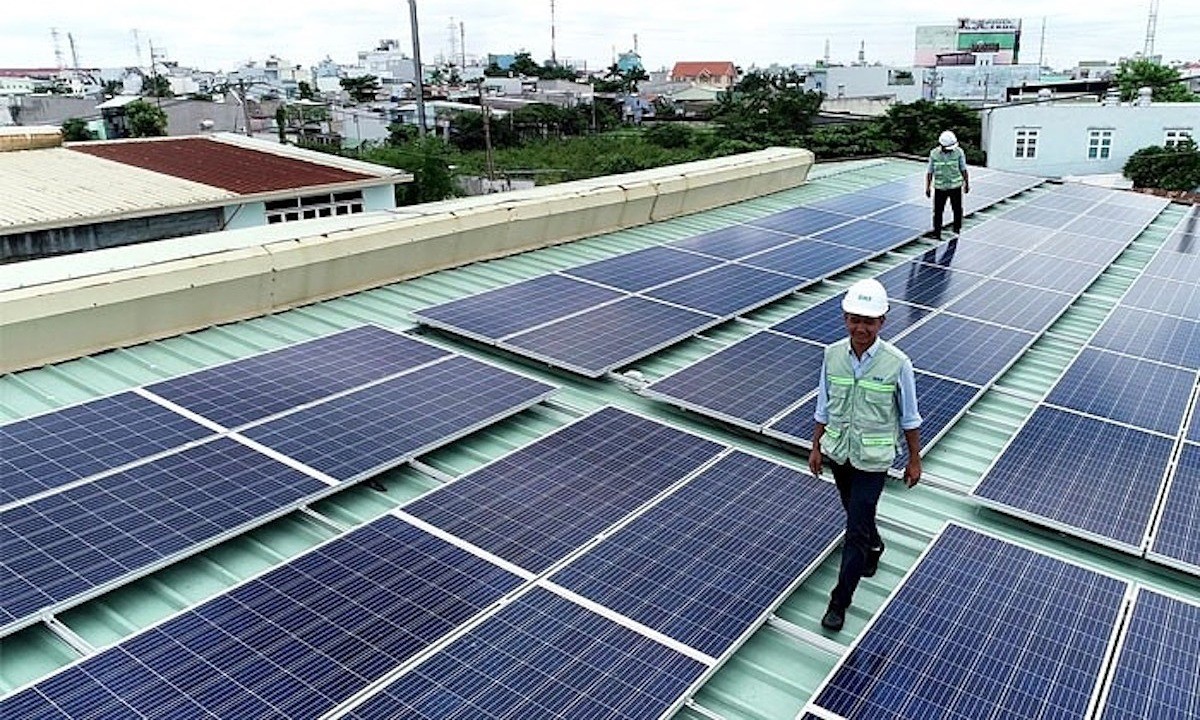
- Off-Grid Rooftop Solar: Systems that generate electricity primarily for on-site consumption, with excess power possibly sold behind the meter.
- Grid-Connected Rooftop Solar: Hybrid systems that provide power for on-site use and, at the owner’s discretion, can export surplus electricity to the national grid.
Scope of Application
Decree 135 expands the policy’s reach to all sectors, including residential areas, government offices, industrial zones, clusters, export processing zones, high-tech zones, economic zones, production facilities, and enterprises across the country.
Categories
Under Decree 135, rooftop solar power sources are classified as follows:
- Non-Grid-Connected Rooftop Solar Power: Systems not connected to the national grid and intended primarily for self-consumption do not require an operating license. However, investors must notify and submit design documents to the Department of Industry and Trade, the local electricity provider, fire safety authorities, and provincial construction authorities for monitoring purposes.
- Grid-Connected Rooftop Solar Power: Systems connected to the national grid, particularly those with capacities under 1 MW, require advance notification and design document submission to relevant authorities. Additionally, systems with a capacity from 100 kW must install monitoring equipment that meets Vietnam Electricity (EVN) technical standards. Certification from the provincial Department of Industry and Trade is also required.
Incentive Policies for Rooftop Solar Systems
- Capacity and Licensing: Non-grid-connected systems face no capacity limits and are exempt from licensing. Grid-connected systems with anti-backflow protection also have no capacity restrictions; however, systems exceeding 1 MW in capacity are subject to licensing for surplus electricity.
- Land and Construction: Land repurposing is unnecessary, and systems on public properties are classified as technological equipment attached to the building.
- Tax Benefits: Rooftop solar installations are eligible for tax incentives.
- Energy Sales: For grid-connected systems under the PDP8 plan and below 100 kW, up to 20% of surplus energy (within actual installed and registered capacity) can be sold to EVN at the previous year’s average market price. Public properties with solar systems are ineligible for surplus energy transactions.
- Business License and Storage: Households are exempt from license adjustments. Energy storage is permitted, supporting the deployment of Battery Energy Storage Systems (BESS), and administrative procedures have been simplified.
Assessment of Midland & Partners:
Promoting Investment in Self-Produced Rooftop Solar Power
Decree 135 has fostered significant growth in self-produced and self-consumed rooftop solar power in Vietnam. As stipulated in Article (8), these installations are exempt from electricity operation licenses and are free from capacity restrictions. The Decree also provides tax incentives and streamlines administrative procedures, making the investment process smoother. Furthermore, Article (8) enables households, individual properties, and organizations to sell surplus electricity back to the national grid at the prior year’s average market electricity rate. These policies are set to stimulate investment and heighten demand for self-produced rooftop solar systems across various sectors.
Lowering Financial Burdens for Residents
Decree 135 effectively reduces electricity costs for individuals and organizations adopting rooftop solar power. As electricity prices continue to rise, these self-consumption systems provide a cost-effective solution for lowering energy expenses.
Supporting Global Environmental Initiatives
Decree 135/2024 aligns Vietnam with global environmental goals. During recent discussions with Foreign Direct Investment (FDI) enterprises and at the Vietnam Business Forum (VBF 2024), Prime Minister Pham Minh Chinh emphasized the Government’s commitment to fostering a supportive and development-focused environment for businesses, while also addressing global environmental challenges. Encouraging rooftop solar adoption contributes directly to these objectives, highlighting Vietnam’s active participation in sustainable and environmentally friendly energy practices.
By Phan Thi Phuong Anh
Paralegal
Midland & Partners
Related Post
-
 The Draft Amendments to Decree No. 75/2019/NĐ-CP: Strengthening The Legal Framework for Administrative Sanctions in Competition Law
-
 DECREE NO. 296/2026/ND-CP: KEY CHANGES TO ENTERPRISE REGISTRATION IN VIETNAM
-
 KEY CHANGES TO OUTBOUND INVESTMENT REGIME UNDER VIETNAM’S DECREE NO. 103/2026/NĐ-CP
-
 How to calculate the latest corporate income tax
-
 Will the Law on Bidding 2023 address the issue of selecting a pilot business for international football betting?
-
 OFFSHORE WIND: KEY CHANGES UNDER DECREE 272/2026/ND-CP